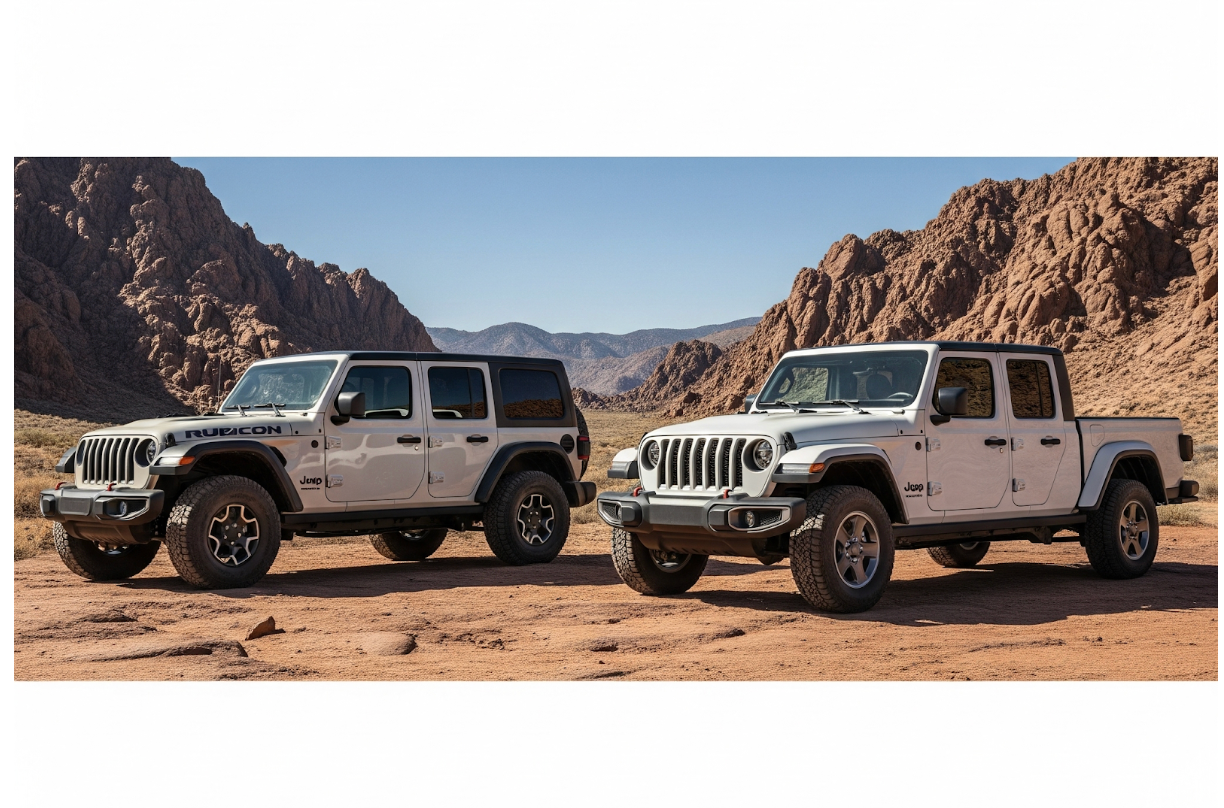





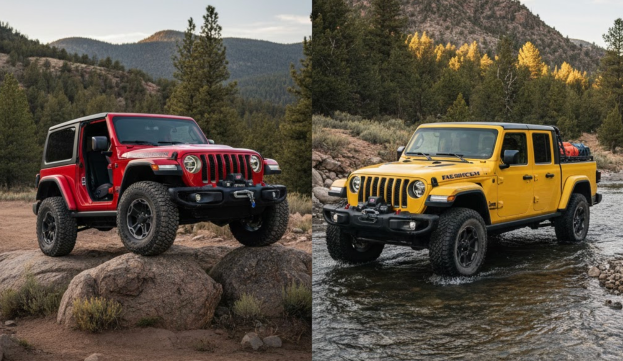
The 2026 Wrangler Rubicon and the Jeep Gladiator represent two genuinely different approaches to off-road capability and adventure. Both are serious vehicles. Both offer real capability. But they answer different questions about how you want to travel and what you need from your rig. Understanding those differences prevents the regret of choosing the wrong vehicle after months of ownership.
The Fundamental Difference: Form Follows Function
The Wrangler Rubicon is a compact SUV built on a platform refined over decades of off-road use. You get a driver, passenger, two rear passengers, and modest cargo space. It's nimble, maneuverable, and genuinely capable on challenging terrain.
The Gladiator is a midsize pickup truck built on the Wrangler's platform but stretched to accommodate a full bed. You get those same four seats, but now you have five feet of truck bed instead of a cargo area. That changes everything about how you use the vehicle.
Neither is "better"—they're different tools for different jobs.
Off-Road Capability: Surprises in the Details
Both vehicles come with portal axles, electronic locking differentials, disconnectable sway bars, and the same core off-road technologies. The Rubicon Recon package matches capability features. They can genuinely go to the same places and handle the same terrain.
The real difference? The Gladiator's longer wheelbase affects handling on tight technical trails. That extra length makes sharp turns tighter and rock crawling more complex. The Rubicon's compact dimensions make it nimbler on genuinely difficult terrain. But the Gladiator's weight distribution and longer wheelbase improve stability on high-speed off-road driving and rough washboard roads.
If you're doing serious rock crawling in places like Moab, the Rubicon's nimbleness matters. If you're overlanding across vast backcountry distances, the Gladiator's stability and carrying capacity shine.
Daily Driving Reality
The Wrangler Rubicon offers more car-like daily driving. It fits in standard parking spaces. Highway driving feels more familiar to most drivers. It's easier to park in urban environments and navigate tight spaces.
The Gladiator is a truck—period. Parking requires more planning. Highway wind affects it more noticeably. But you gain a truck bed for actual work, cargo hauling, and adventure equipment. If you need to carry a roof tent, firewood, camping gear, and recovery equipment while still having seats for four people, the Gladiator answers that need. The Rubicon requires a roof rack and external storage solutions that eat into off-road ground clearance and visibility.
Towing and Payload
The Rubicon tows 3,500 pounds maximum. That's a small trailer or a jet ski.
The Gladiator tows 6,500 pounds depending on engine and drivetrain configuration. That's approaching full-size pickup truck capability. Payload capacity exceeds 1,500 pounds depending on configuration. If you're serious about towing a substantial trailer or boat, the Gladiator genuinely handles it better. The Rubicon becomes a compromise.
Price and Value
The Wrangler Rubicon starts lower. Significantly lower. If budget is constrained, the Rubicon offers remarkable off-road capability for the price.
The Gladiator commands premium pricing for that bed and additional capability. But you're getting a truck with genuine towing and hauling ability combined with serious off-road credentials. That's rare. Most trucks sacrificed off-road capability for towing. The Gladiator genuinely delivers both.
Understanding Your Actual Needs
Before deciding, honestly answer these questions:
Do you need to haul cargo regularly or just occasionally? The Rubicon's roof rack handles occasional gear. The Gladiator's bed handles regular cargo hauling.
Are you rock crawling technical trails or overlanding vast distances? Rubicon wins on technical terrain. Gladiator excels at distance and stability.
Do you drive in cities regularly? The Rubicon's size matters. The Gladiator's truck bed becomes an inconvenience in tight urban environments.
Are you towing anything regularly? The Gladiator's capability is far superior.
When the Rubicon Is the Clear Choice
You want maximum maneuverability on technical terrain. You drive in urban environments regularly and parking space is precious. You're budget-conscious but want serious off-road capability. You won't need to tow regularly. You value the iconic Wrangler form factor.
When the Gladiator Makes More Sense
You need regular hauling or towing capacity. You plan overlanding trips spanning weeks across varied terrain. You want to carry substantial gear while maintaining interior comfort. You value the truck bed for work or adventure equipment. You drive highway distances regularly and appreciate truck-like stability.
Exploring Your Options
If you're interested in understanding the full range of Jeep off-road capabilities, both the Rubicon and Gladiator rank among the most capable vehicles available. They're genuinely among the best Jeep models for off-roading enthusiasts because they combine real capability with modern reliability.
Visit Ken Ganley CDJR Mentor to experience both vehicles. As Ohio's largest RAM dealership, they work with serious off-road enthusiasts regularly and understand what these vehicles actually deliver. Test drive both back-to-back. The difference in driving dynamics becomes immediately obvious—that experience clarifies which vehicle genuinely fits how you actually travel.
Check current auto show specials for pricing on 2026 models. Both vehicles represent serious investments, so starting with accurate pricing helps your decision-making process.
The Decision
Neither the Wrangler Rubicon nor the Gladiator is "wrong." They're genuinely different vehicles solving different adventure challenges. The right choice is the one that matches your actual needs, not the one that looks coolest or offers more capability you won't use. Honest self-assessment prevents months of regret after purchase.