





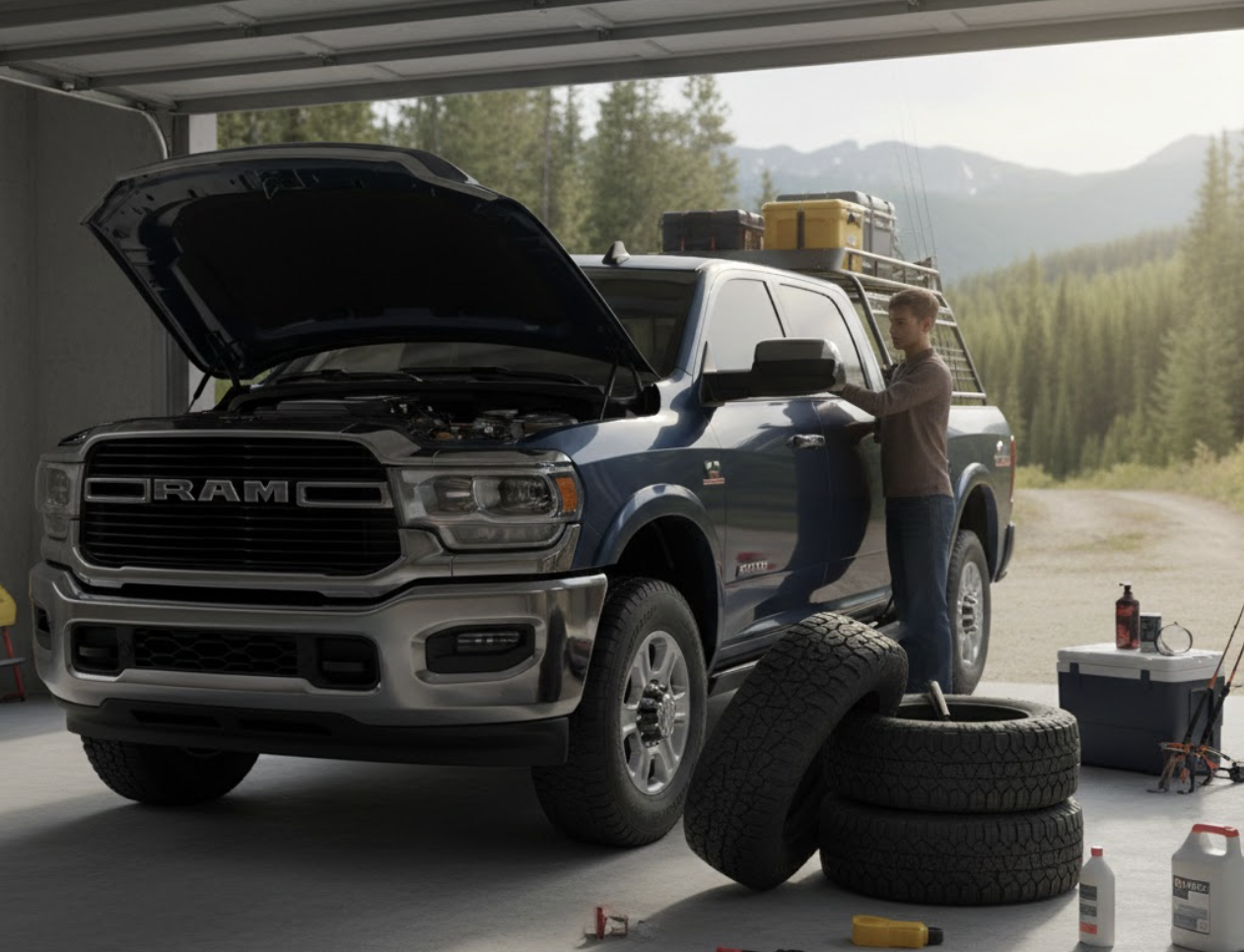
Summer is peak adventure season, and if you own a 2026 RAM 2500, you’ve got a vehicle genuinely capable of handling serious trips. Whether you’re planning extended towing, cross-country highway driving, or remote camping adventures, preparation separates the trips where everything runs smoothly from the ones where you’re troubleshooting in the heat on the side of the road.
A few hours of preparation now prevents headaches when you’re hundreds of miles from home with temperatures climbing.
Start with Cooling System Integrity
Summer heat is relentless, and your RAM 2500’s cooling system will work harder than at any other time of year. Check your coolant level when the engine is cold—your owner’s manual shows exactly where. More importantly, inspect the coolant itself. Fresh coolant is brightly colored (typically green, orange, or pink depending on the formula). Discolored or murky coolant indicates contamination and reduced cooling effectiveness. If your last coolant flush was more than two years ago, now is the time to schedule one. Summer heat compounds the demands on your cooling system, and you don’t want to be guessing about its condition.
Examine your radiator and condenser fins for debris. Dust, bugs, and dirt accumulation reduces cooling efficiency. A gentle spray with a garden hose from the engine side clears most buildup. Avoid high-pressure washing, which can damage the delicate fins.
Your serpentine belt deserves attention too. Summer heat makes rubber more brittle. Look for cracks, fraying, or glazing. A belt that appears questionable before summer starts will likely fail during peak heat. Replace it now rather than on the roadside.
Tire Condition and Pressure
Summer heat expands tire air, naturally increasing pressure. Before any trip, check tire pressure when tires are cold (before driving or at least three hours after). Summer heat can increase pressure 2-4 PSI beyond cold readings, so your target pressure changes slightly with season. Your door jamb sticker specifies the correct pressure—follow that rather than the maximum pressure listed on the tire sidewall.
Inspect tire tread depth using the penny test: insert a penny upside down into the tread. If you can see the top of Lincoln’s head, tread is insufficient for safe summer driving, especially if you’ll encounter wet conditions. Uneven wear patterns indicate alignment issues that should be addressed before long trips.
Summer drives often mean higher speeds and heavier loads. Tire condition directly affects safety, fuel economy, and how your truck handles. Don’t skip this step.
Battery Health Assessment
Heat damages batteries faster than cold. Summer is actually when most batteries fail, despite winter getting more attention. Have your battery tested by a professional—most auto parts stores do this free. At minimum, visually inspect battery terminals for corrosion (a white, blue, or green crusty buildup). Clean terminals with a wire brush if needed. Ensure cables are tight and not cracked.
If your battery is three or more years old, plan replacement before it fails. A dead battery 400 miles from home during summer heat ruins plans quickly.
Fluid Checks Beyond Coolant
Your transmission fluid handles summer heat differently than coolant. Dark or burnt-smelling transmission fluid indicates problems. If you’re planning towing or mountain driving where transmission temps run high, consider having transmission fluid serviced before the trip. This is especially important if you own a RAM 2500 designed for serious towing.
Engine oil matters too. Summer heat thins oil slightly, but modern synthetics handle this well. Check your level and condition—if it’s significantly darker than when newly changed, an oil change before travel makes sense. Fresh oil improves cooling efficiency and engine protection during demanding summer driving.
Towing and Load Capacity Reality Check
If you’re planning serious towing this summer, verify your setup honestly. Understand your truck’s actual towing capacity, your trailer’s weight, and the combined load. Proper understanding of your RAM 2500’s capabilities prevents unsafe situations. Overweight trailers affect braking, handling, and transmission temperature—exactly the components that suffer most in summer heat.
Inspect hitch connections, safety cables, and trailer lighting. These components degrade with weather exposure. Ensure they’re functioning before departing.
Interior Climate Control
Have your air conditioning system serviced before summer peaks. A weak AC during highway driving creates stress and discomfort. Refrigerant can leak over time; if your AC blows cool but not cold, refrigerant charge likely needs attention. Your HVAC system also benefits from cleaning—dirty cabin air filters reduce efficiency and air quality.
Test all ventilation modes before trips. Proper air circulation maintains comfortable cabin temperatures during extended driving.
Safety Equipment and Emergency Supplies
Summer adventures mean being prepared for problems. Carry jumper cables, a spare serpentine belt, extra coolant, transmission fluid, and engine oil. Include a basic tool kit, flashlight with extra batteries, tire repair supplies, and a spare tire (verify it’s properly inflated). First aid supplies, water, and emergency blankets complete the basics.
Planning Your Adventure
Whether you’re interested in understanding different vehicle capabilities for various adventure styles—from highway touring to off-road exploration—selecting the right vehicle matters. Understanding what different adventure vehicles offer helps you make the most of your vehicle’s actual strengths.
Ready for Summer
VisitKen Ganley CDJR Mentor if you need professional inspection before summer travels. As Ohio’slargest RAM dealership, they have the expertise to ensure your 2026 RAM 2500 is genuinely ready. Check current specials if you’re considering upgrades or additional equipment for your adventures.
Summer adventures in a properly prepared RAM 2500 are genuinely memorable. Invest the preparation time now, and your truck will perform reliably when it matters most.
Connect with us


- July 2026
- June 2026
- May 2026
- April 2026
- March 2026
- February 2026
- January 2026
- December 2025
- November 2025
- October 2025
- September 2025
- August 2025
- July 2025
- June 2025
- May 2025
- April 2025
- March 2025
- February 2025
- January 2025
- December 2024
- November 2024
- October 2024
- September 2024
- August 2024
- July 2024
- June 2024
- May 2024
- November 2023
- October 2023
- September 2023
- August 2023
- July 2023
- June 2023
- May 2023
- April 2023
- March 2023
- February 2023
- January 2023
Archives
- Adventure SUV
- Auto Finance Mentor OH
- CDJR Maintenance in Mentor
- Certified Pre-Owned Inventory
- Chrysler Dealer Mentor OH
- Chrysler Pacifica
- Dodge Charger
- Foodies
- Jeep Dealer
- Jeep Grand Cherokee
- Jeep Grand Cherokee vs. Wrangler
- Jeep Trim Levels
- Jeep Wrangler Maintenance Tips
- Jeep Wrangler Road Trip Tips
- Ken Ganley CDJR Mentor
- Ken Ganley Chrysler Dodge Jeep Ram Fiat Painesville
- Ken Ganley Chrysler Dodge Jeep Ram FIAT Painesville Service
- Lease Offers
- Local Community Events
- Mentor OH CDJR Dealer
- Mentor Ohio RAM Dealer
- Multi-Point Inspection and Alignment Check
- New CDJR Inventory
- New Chrysler Inventory
- New Chrysler Specials and Offers
- New Dodge Specials and Offers
- New Jeep Specials and Offers
- New RAM Specials and Offers
- Ohio Events
- Painesville Amenities
- Painesville Chrysler Dealer
- Painesville Dodge Dealer
- Painesville Eateries
- Painesville Fiat Dealer
- Painesville Jeep Dealer
- Painesville Living
- Painesville Ram Dealer
- Painesville Used Cars
- RAM 1500
- RAM Model Specs
- Restaurants in Painesville
- Service Center Mentor OH
- Spring Maintenance
- Tax Refund
- Things to do in Painesville
- Towing Capabilities
- Trims and Features
- Uncategorized
- Used Inventory
- Willoughby, OH Community Event